Foundation Crack Repair in Oklahoma City
A thin crack that is not changing can be sealed or patched for a few hundred dollars or less. A crack that keeps growing means part of the house moved, and it will reopen until that movement is stopped, so fix the cause first and the crack last.
On this page
The short answer
Most hairline cracks in a slab or along a drywall seam are cosmetic. Seal them if they bother you, or leave them alone and keep an eye on them.
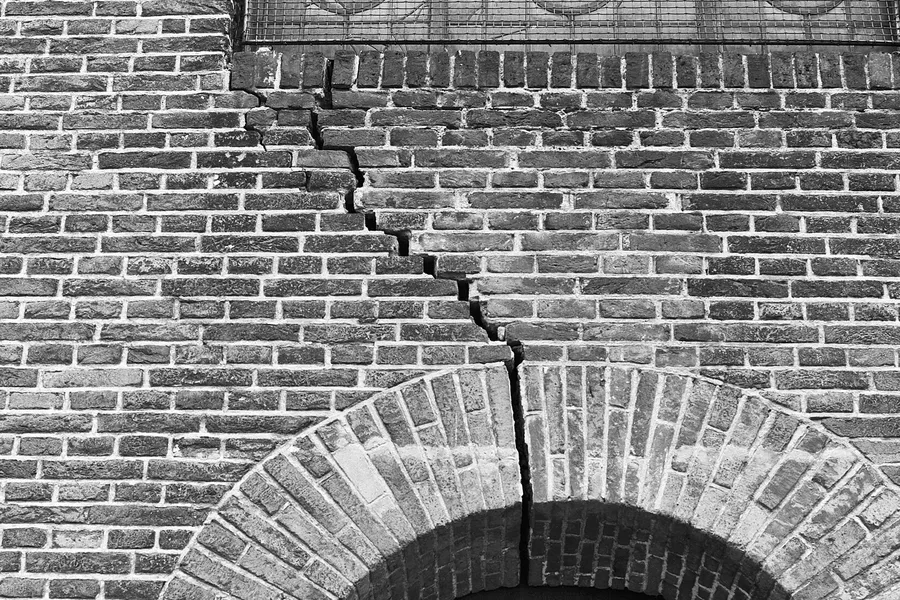
Cracks that step through brick, run sideways along a foundation wall, or open wider at one end are different. They are the visible end of soil movement under the house. Filling one of those without stopping the movement buys you a nice-looking wall for a season or two, and then the crack comes back in the same place or right next to it.
So the useful question is whether that part of the house has stopped moving. If you are not sure which kind you have, a photo is often enough for a first opinion.
Fixing the crack vs. fixing what moved
A crack is a symptom, and the repair guides say so plainly.
The American Concrete Institute's field guide to epoxy injection says that "before any concrete repair is carried out, the cause of the damage must be assessed and corrected," and that "if the crack is subject to subsequent movement, an epoxy repair may not be applicable." The National Park Service guide to repointing brick lists differential settlement among the problems new mortar will not solve, and warns that without fixing the source, "any repointing will have been a waste of time and money."
That matters in Oklahoma City because much of the metro sits on clay that swells when wet and shrinks when dry. In our analysis of USDA soil survey data, 69 to 84% of the land in south and west-central OKC ZIPs (73159, 73139, 73119, 73120, 73162) is high shrink-swell clay. On that soil a crack can widen in a dry summer and narrow again after a wet spring. A rigid filler set at one width does not move with it.
This year is dry. As of October 20, 2026, the US Drought Monitor had all of Oklahoma County in severe drought (D2) or worse. A crack patched now, at its widest, is being patched under conditions that will change when the rain comes back.
Crack types on OKC homes
For a sign-by-sign walk through what to look for, see signs of foundation problems. This table is about repair.
| Crack | Usually means | Typical repair |
|---|---|---|
| Hairline crack in a slab or garage floor, flat on both sides | Shrinkage as the concrete dried, which ACI lists first among typical causes of cracking | Often nothing. Seal it if water gets in or flooring is going over it. |
| Diagonal drywall crack from the corner of a door or window | The wall frame racked because the foundation under it shifted | Patch and repaint, after the movement is stopped |
| Stair-step crack in brick or mortar | Settlement or heave under that part of the wall | Stabilize first. Then repoint the mortar. |
| Horizontal crack in a stem wall or basement wall | Soil pushing sideways on the wall | An engineered structural repair, not a patch |
| Brick pulling away at a window or door frame | The veneer has moved, and the ties holding it to the house may have failed | Stabilize, re-tie the veneer, reseal around the frame |
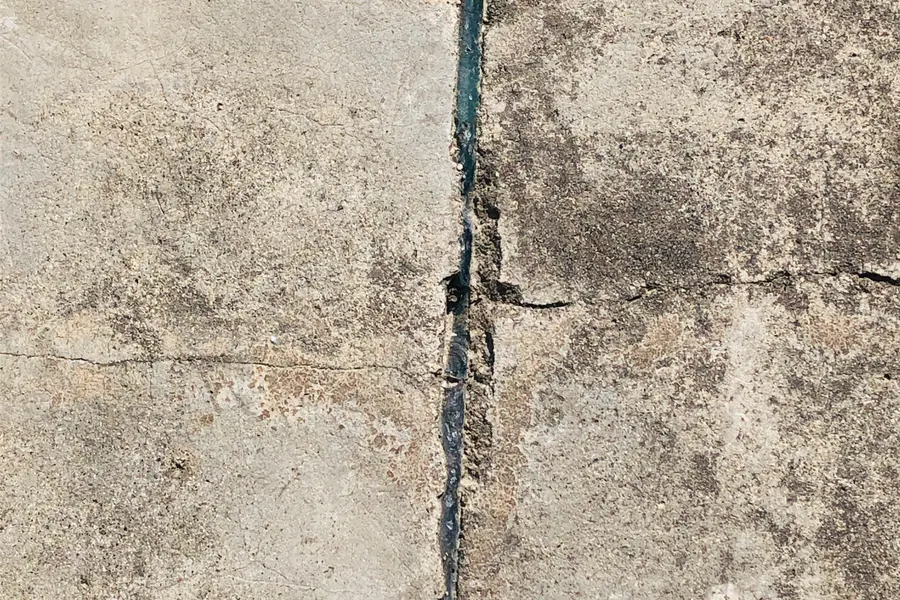
Slab cracks
Concrete loses water as it cures and shrinks a little, and the crack is where it gave. What changes the picture is a lip (one side higher than the other) or a crack that lines up with trouble in the walls above it. Those are slab movement, covered in slab foundation repair.
Horizontal cracks
These are the ones not to wait on. InterNACHI, the home inspectors' association, describes the pattern: saturated soil presses on the outside of the wall, the wall bends inward, and the crack that results is "usually horizontal, open more than hairline," often with signs of water coming in. Filling that crack does nothing about the soil pressure. Get a structural opinion before anyone quotes you a sealant.
Brick separating at windows
Brick on a typical frame house is a veneer: one layer of brick standing a short distance off the wood frame, held to it with small metal ties. FEMA's guidance on brick veneer lists the common ways those ties fail, including nails pulling out of the studs, ties that were never set into the mortar, poor bond with the mortar, and corrosion. It also calls for ties within 8 inches of door and window openings. When a gap opens at a window, the inspection should say whether the ties are still doing their job.
Repair methods and what each one actually does
Epoxy injection
A contractor seals the surface of the crack, sets small ports along it and pumps in epoxy under pressure until it fills the crack's full depth. ACI says it can "restore structural integrity" in concrete cracks as narrow as 0.002 inch. The catch is that epoxy cures hard. It is meant for a crack that is done moving, and ACI says the conditions that caused the crack must be corrected before injecting.
Polyurethane injection
Same idea, different material. Polyurethane foams and stays somewhat flexible, and it is often used on a crack that leaks. ACI's guide says that when a crack does not compromise the structure, "polyurethane grouts or other nonstructural materials may be a more suitable choice." Note the word nonstructural. It keeps water out. It does not hold anything together.
Routing and sealing
The crack is cut into a shallow V-shaped groove and filled with a flexible sealant. The Texas Department of Transportation's repair manual describes a groove about 3/8 inch deep and recommends it where "a small amount of movement is anticipated." TxDOT presents it as a way to keep water out. It does not restore strength.
Tuckpointing and repointing brick
Repointing (often called tuckpointing) means grinding out cracked mortar and packing in new mortar. The detail that matters: the National Park Service says new mortar should be softer than the brick, because a mortar that is "stronger in compressive strength than the masonry units will not give," and the next round of stress cracks the brick itself instead of the joint. Ask what mortar will be used.
Re-tying brick veneer
Where veneer has pulled away, a mason can install new ties through the mortar joints into the framing behind, then repoint. We could not find a reliable published US price for this, so ask for it as a separate line on the estimate.
Patching drywall
Tape, mud, sand, paint. It is the cheapest repair on this page and the one most often done too early. Wait until the foundation work is finished and, if the house was lifted, until the walls have had time to settle into their new position.
Soil type explains a lot of how often a crack will come back. You can look up your own ZIP below.
What crack repair costs
These are published ranges from national cost guides. They are not quotes or what any one contractor will charge you.
| Repair | Published range | Source |
|---|---|---|
| Hairline crack to a serious fix | Under $50 to over $8,000 | Bob Vila |
| Minor crack sealing or patching | $250 to $800 per crack | HomeGuide |
| Epoxy or polyurethane injection | $400 to $1,500 per crack | HomeGuide |
| Cracks with structural damage | $2,000 to $12,000 or more | HomeGuide |
| Fixing a cracked foundation, typical national range | $1,982 to $7,290 | Thumbtack |
| Tuckpointing | $5 to $25 per sq. ft.; $500 to $2,500 per job | Bob Vila (Angi and HomeAdvisor data) |
| Drywall: several holes and cracks in one room | $200 to $550 | Bob Vila |
The gap between the second and fourth rows is the whole story. Sealing a crack is a few hundred dollars. Stopping the movement that made it is where the money goes, usually through piers (columns set into the ground under the foundation to hold it up), drainage work or both. See foundation repair cost in Oklahoma City for those numbers and foundation piering for how piers work.
The mistake: patching before the movement stops
This is an easy way to pay twice. A crack shows up in the brick and someone repoints it, or a handyman fills a drywall crack. A season or two later the crack is back. Now you pay for the foundation repair, and then for the same patch again.
A patch can also hide the evidence. A crack that has been filled and painted is harder to measure, and the contractor who inspects your home loses the clearest record of how much and in which direction the wall moved.
The order that works:
- Measure and photograph the crack before anyone touches it.
- Find and fix the cause: drainage, a plumbing leak, or settlement that needs piers.
- If the house is lifted, let it sit and watch the crack for a while.
- Do the cosmetic work last: injection, repointing, re-tying, drywall.
Before you sign, ask whether drywall and brick repair are in the foundation estimate, and if not, who does them and when. Our guide to choosing a foundation repair company has more questions worth asking.
If a crack has already reopened after a patch, have someone look at what is under it.
How to monitor a crack
The American Society of Civil Engineers' homeowner guide to shrink-swell soils says to monitor existing cracks "for progressive or seasonal movements." Progressive means getting worse over time. Seasonal means opening and closing with the weather. On OKC clay you will often see both, so take readings across more than one season.
Pencil marks
Mark both ends of the crack with a short line and the date. If the crack runs past a mark, it is still growing.
Dated photos
Photograph the crack with a ruler or tape measure held flat against it, from the same spot and at the same distance each time. Monthly is plenty. Keep the photos in one album and note the weather, since a reading after a week of rain is not comparable to one after a month of drought.
A crack gauge
For a crack you are worried about, a crack gauge (also called a tell-tale) is more precise. It is two overlapping plates fixed across the crack, one on each side. One plate carries a millimeter grid and the other a cursor. When the crack moves, the cursor moves across the grid, and you write down its position on each reading. The recording sheets that come with the Avongard gauges mark opening as plus and closing as minus. The UK's Building Research Establishment notes that how a crack is classified can depend on "whether the widths of the cracks are increasing with time." A gauge records exactly that.
If you are buying a house rather than living in one, you will not have months of readings. See pre-purchase foundation inspections for what to do instead.
When to stop watching and call
Watching makes sense for a thin crack that is not changing. It does not make sense for a horizontal crack in a foundation wall, brick that is visibly pulling away from the house, or any crack that has grown in a few weeks. Those deserve an inspection now, not after another season of readings.
A local foundation specialist can tell you in one visit whether a crack is cosmetic or movement, and put the order of work in writing.
Questions homeowners ask
Can I repair a foundation crack myself?
A thin, dry crack that is not growing can be sealed with a store-bought kit to keep moisture out. That does nothing about movement. A crack that is growing should be looked at before it is filled, and so should any stair-step or horizontal crack.
Is epoxy or polyurethane better for foundation cracks?
They do different jobs. The American Concrete Institute describes epoxy injection as a structural repair for a crack that is no longer moving, and polyurethane as a nonstructural fill that suits cracks where the goal is to stop water.
How much does foundation crack repair cost?
HomeGuide lists minor crack sealing at $250 to $800 per crack and epoxy or polyurethane injection at $400 to $1,500 per crack. Cracks tied to structural damage run $2,000 to $12,000 or more because the movement has to be fixed too.
Why did my crack come back after it was patched?
Almost always because the part of the house around it is still moving. On Oklahoma clay that often follows the seasons, so a crack filled in a dry month can reopen after the soil wets and dries again.
How long should I watch a crack before repairing it?
Long enough to see it through a dry stretch and a wet one, since clay soil makes cracks open and close with the weather. A crack that grows over a few weeks, or any horizontal crack in a foundation wall, should be inspected right away.
Sources
- American Concrete Institute, RAP Bulletin 1: Structural Crack Repair by Epoxy Injection
- National Park Service, Preservation Brief 2: Repointing Mortar Joints in Historic Masonry Buildings
- Texas Department of Transportation, Concrete Repair Manual: Rout-and-Seal Cracks
- FEMA, Attachment of Brick Veneer in High-Wind Regions (Hurricane Katrina Recovery Advisory, Dec 2005)
- InterNACHI, Foundation Crack from Lateral Movement and Hydrostatic Pressure
- ASCE Geo-Institute, Living With Shrink/Swell Soils: A Homeowners' Guide
- BRE Group, Assessing cracks in houses
- Avongard crack monitor recording sheet (via Gilson)
- HomeGuide: Cracked Slab Foundation Repair Cost
- Bob Vila: How to Know When You Should Repair a Foundation Crack (updated Sep 2025)
- Thumbtack: How much does it cost to fix a cracked foundation? (updated Jun 2026)
- Bob Vila: How Much Does Tuckpointing Cost?
- Bob Vila: Drywall Repair Cost
- Data: USDA NRCS Soil Survey (SSURGO), US Census ACS 2020-2024, USGS Earthquake Catalog, US Drought Monitor