Signs of Foundation Problems: What Your Cracks and Doors Are Telling You
Most thin hairline cracks are cosmetic. Cracks that are wide, growing, stair-stepped or paired with sticking doors and sloping floors are the ones worth having looked at.
On this page
The fast answer
Houses move a little, and hairline cracks in drywall or concrete are common. A single thin crack that is not changing is usually a paint-and-patch job, not a foundation repair.
What matters is the pattern. Engineers who study clay soils say the chance that a foundation has moved goes up with the number of warning signs you see, how often they show up and where they are in the house (ASCE Geo-Institute).
Signs that mean it is worth getting a professional look:
- Stair-step cracks in brick or block
- Cracks wider than about 1/4 inch, or cracks that keep getting wider
- Doors or windows that suddenly stick, or show a wedge-shaped gap at the top
- Floors that slope enough to roll a marble, or feel bouncy
- Gaps opening between walls and ceilings, trim or window frames
If you want a quick read on your own situation before going sign by sign, answer a few questions below.
60-second check
Is it serious?
A rough guide based on common warning signs, not a diagnosis. Only someone who sees and measures your home can tell you what's really going on.
Why OKC homes show these signs
Much of the metro sits on clay that swells when wet and shrinks when dry. In our analysis of USDA soil survey data, south and west-central OKC ZIPs such as 73159, 73139, 73119, 73120 and 73162 have 69 to 84% of their land on high shrink-swell clay. The east side (Choctaw, Harrah, Midwest City, Nicoma Park, east Edmond) sits mostly on sandier soils that move much less.
When that clay dries unevenly, one part of the house settles more than another. The foundation risk map shows where your ZIP falls.
Sign by sign: what it means and how worried to be
Each sign has a worry level (watch, get it checked or act soon) and a simple self-test.
1. Stair-step cracks in brick
What it usually means: A diagonal crack that zigzags along the mortar joints (or through the bricks) is one of the classic signs of soil movement listed by the American Society of Civil Engineers.
Worry level: Get it checked. Act soon if the crack is wider at one end than the other, if bricks have shifted out of line, or if you can see daylight through it.
Self-test: Sight down the wall from one corner. ASCE lists sagging brick lines as another sign of movement. Then mark the crack ends (see the pencil test below) and check again in a month.
2. Drywall cracks: vertical, horizontal and diagonal
What it usually means: Short, thin vertical cracks along a drywall seam are common and usually come from the drywall itself. Diagonal cracks running out from the corners of doors and windows are a different matter: ASCE lists cracks above doors and windows and cracks at wall corners as interior signs of soil movement.
Worry level: Watch a single hairline seam crack. Get it checked for diagonal cracks at door and window corners, especially several of them, or any crack that reopens after it was patched.
Self-test: The pencil test. Draw a short line across each end of the crack with a pencil and write the date next to it. Take a photo with a ruler held against the crack. If the crack runs past your marks or gets wider over the next few weeks, it is active.
3. Doors and windows that stick, or gaps at the top
What it usually means: When the house shifts, door frames go out of square. ASCE lists sticking doors (warped frames) and sticking windows as typical signs of shrink-swell movement.
Worry level: Watch if it is one door during a humid week (wood swells too). Get it checked if several doors stick, if you see a gap shaped like a wedge between the top of the door and the frame, or if it lines up with cracks nearby.
Self-test: Close the door and look at the gap around it. An even gap is fine. A gap that is wide at one top corner and closed at the other means the frame has racked.
4. Sloping or bouncy floors
What it usually means: A sloping floor is on ASCE's list of interior indicators. On a slab it usually means one part of the foundation has settled or heaved. On a pier and beam house (a floor built on posts over a crawl space), it can also mean a settled pier or a sagging beam. A bouncy or springy floor more often points to the framing under the floor, such as a weak joist or a beam that has lost support. Learn more about the two types in pier and beam vs slab.
Worry level: Get it checked. Act soon if the slope is new or getting worse, or if a floor feels soft in one spot.
Self-test: Set a marble or a small ball on a hard floor in a few rooms and see which way it rolls. Better, lay a 4-foot level on the floor and note where the bubble sits.
5. Gaps between walls and ceilings or trim
What it usually means: ASCE lists cracks or separations in walls and ceilings and the bottom of a wall separating from the floor as signs of movement.
Worry level: Watch a hairline gap at one spot. Get it checked if the gap is growing, runs along a whole wall, or shows up in several rooms.
Self-test: Slide a credit card into the gap. A standard card is about 0.76 mm thick (just under 1/32 inch, per the ISO/IEC 7810 card standard). If the card slides in easily and the gap grows over weeks, write that down for the inspector.
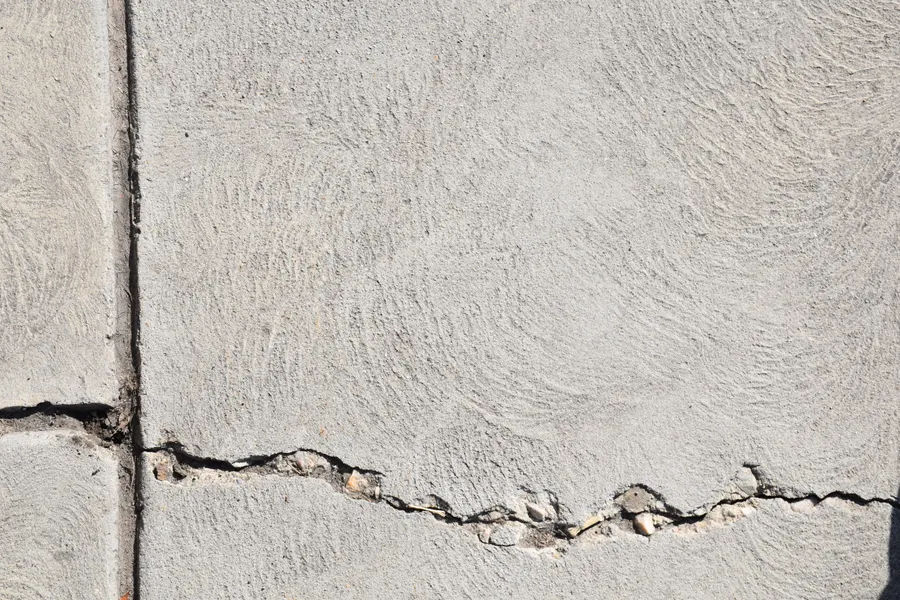
6. Cracks in the slab, tile or garage floor
What it usually means: Concrete shrinks as it cures, so thin slab cracks are normal. ASCE lists cracks in ceramic or vinyl tile and cracks in concrete floors 1/16 inch across or wider as signs to note. A crack where one side sits higher than the other (a lip you can feel with your foot) is more telling than width alone.
Worry level: Watch a thin crack that is flat on both sides. Get it checked if tile is cracking in a line across a room, the crack is 1/16 inch or wider, or one side is higher.
Self-test: Run your fingertip across the crack. Flat on both sides is a good sign. Photograph it with a ruler for scale and repeat in a month.
7. A leaning chimney
What it usually means: A masonry chimney is heavy and often sits on its own footing. If that footing settles, the chimney can tilt away from the house, leaving a gap at the roofline or along the siding.
Worry level: Act soon if you see a gap opening between the chimney and the wall, or bricks loosening.
Self-test: From the yard, hold a level or a plumb line (a string with a weight) up in your line of sight and compare it to the chimney's edge. Photograph the gap at the wall from the same spot each month.
8. Exterior gaps at window and door frames
What it usually means: ASCE lists gaps between window frames and walls, separating siding and trim at corners, and patios or driveways pulling away from the foundation as exterior signs of soil movement.
Worry level: Get it checked, especially if the gap matches cracks or a sticking window on the inside of the same wall.
Self-test: Walk the outside of the house with your phone and photograph every window corner and outside corner.
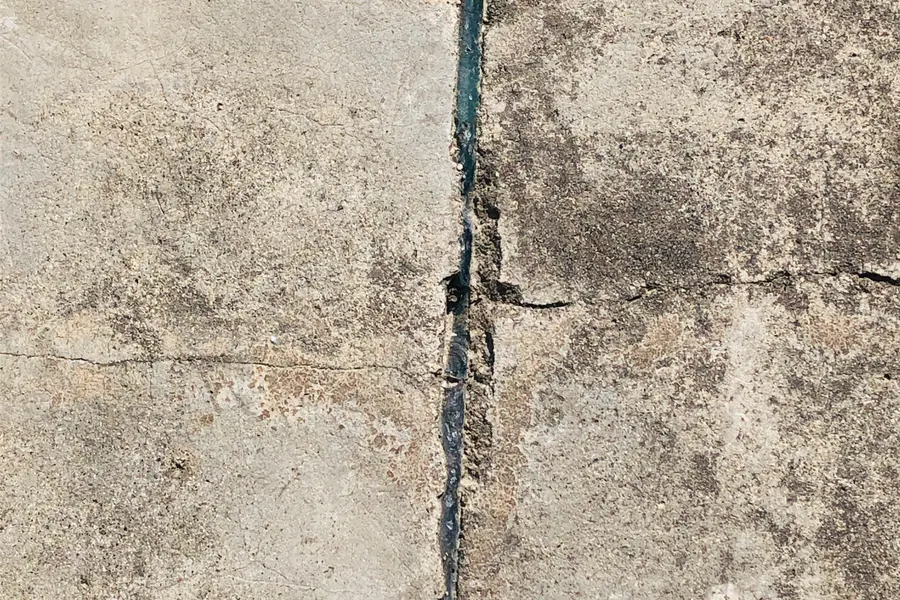
How wide is too wide?
No single width decides it, and the experts below all say growth over time matters as much as size. Still, these published benchmarks give you a sense of scale:
| Width | What the source says |
|---|---|
| 1/16 inch in a concrete floor | Listed as an indicator of shrink-swell movement (ASCE Geo-Institute) |
| Up to 5 mm (about 3/16 inch) in walls | Generally "aesthetic," needing only redecoration, unless the crack is growing (BRE, UK Building Research Establishment) |
| 1/4 inch wide and 12 inches long in a foundation | Counted as a deficiency in HUD's national property inspection standard (NSPIRE) |
If a crack in your home is approaching 1/4 inch, is getting wider, or one side has shifted, it is time for a professional opinion.
A photo is often enough for a first opinion on whether a crack looks cosmetic or worth a visit.
9. Water pooling near the foundation
What it usually means: Pooling is less a sign of damage than a cause of it. ASCE warns that water ponding next to the house can make clay swell in one spot and lift that part of the foundation. It recommends ground that slopes away at least 3 inches over the first 5 feet, and downspouts that discharge at least 3 feet from the house.
Worry level: Watch, and fix the drainage. It is the cheapest foundation protection there is. Get it checked if pooling lines up with cracks or sticking doors on that side of the house.
Self-test: After a rain, walk around the house and note where water stands. A soggy patch in dry weather can point to a plumbing leak, which ASCE lists as a cause of localized movement.
Cracks that open and close with the seasons
On OKC clay, it is normal for cracks to widen during hot, dry months and narrow again after soaking rains. ASCE advises homeowners to monitor existing cracks for both progressive and seasonal movement.
This year is a dry one. As of October 20, 2026, the US Drought Monitor shows 100% of Oklahoma County in severe drought (D2) or worse. So far in 2026, 34 weeks have had at least half the county in severe drought, the most since 2011 (39 weeks) and 2006 (41 weeks). If cracks have appeared or widened this year, drought is a likely part of the reason. See drought and your foundation for watering tips that help keep soil moisture even.
Measure in the same season each year and note recent rain, so you can tell seasonal breathing from a crack that keeps growing.
Your soil type is a big part of how much your house will move with the weather.
Signs that need prompt attention
Most foundation problems develop over months, so there is usually time to watch, measure and get a couple of opinions. A few situations deserve a quicker call:
- A crack that has grown noticeably in a few weeks
- Doors that suddenly will not close or lock
- A chimney or brick wall pulling away from the house
- Floors dropping in one area, or new cracks appearing in several rooms at once
- Water coming in, or a sudden jump in your water bill (a possible slab leak)
If any of these describe your home, talking to someone today is reasonable.
Keep a dated record
Keep your crack photos, pencil-mark dates, sticking-door notes and floor readings in one note on your phone. That record helps the contractor who inspects your home tell old cracks from new movement, and it helps later with insurance questions or selling the house.
What happens next
If you see two or more of the signs above, a free on-site look from a local foundation specialist is a low-pressure way to find out what is going on. Repair cost depends on what they find; see foundation repair cost in Oklahoma City for typical ranges, and choosing a foundation repair company for questions to ask.
When you are ready for someone to take a look in person, you can request a visit here.
Questions homeowners ask
Are hairline cracks in drywall a sign of foundation problems?
Usually not on their own. A single thin crack that is not changing is often normal settling or drywall movement. Diagonal cracks at door and window corners, or several cracks with sticking doors, are more telling.
How wide does a foundation crack have to be to worry?
Width alone does not decide it, and growth over time matters more. As benchmarks, HUD's inspection standard flags foundation cracks 1/4 inch wide and 12 inches long, and the UK Building Research Establishment treats wall cracks up to about 5 mm as generally cosmetic unless they are growing.
Why do my doors stick in summer but not in spring?
On expansive clay, soil shrinks in hot, dry months and swells after rain, so the house can shift slightly with the seasons. Humidity also swells wood doors. If several doors stick at once or gaps are wedge-shaped, have it checked.
Can a crack close up on its own?
Yes. On Oklahoma clay, cracks often narrow after soaking rains and reopen in dry weather. That seasonal movement still means the soil under that spot is changing, so keep tracking it.
How do I check if my floor is sloping?
Place a marble on a hard floor and watch which way it rolls, or lay a 4-foot level in a few spots and note the bubble. Write down the readings so you can compare them later.
Sources
- ASCE Geo-Institute, Living With Shrink/Swell Soils: A Homeowners' Guide
- BRE Group, Assessing cracks in houses (BRE Digest 251 summary)
- HUD, NSPIRE Standards v2.1: Foundation
- ISO/IEC 7810 identification cards, physical characteristics (0.76 mm nominal thickness)
- US Drought Monitor, Oklahoma County
- Data: USDA NRCS Soil Survey (SSURGO), US Census ACS 2020-2024, USGS Earthquake Catalog, US Drought Monitor